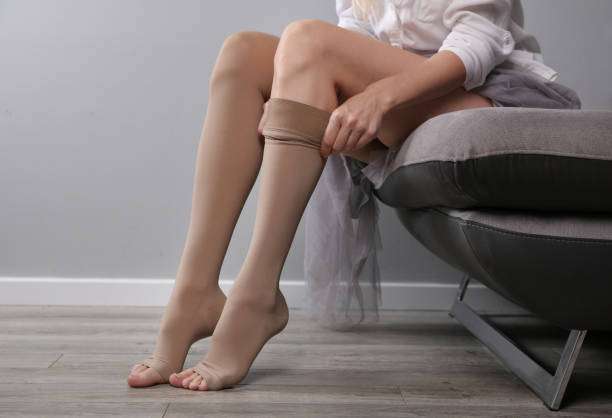
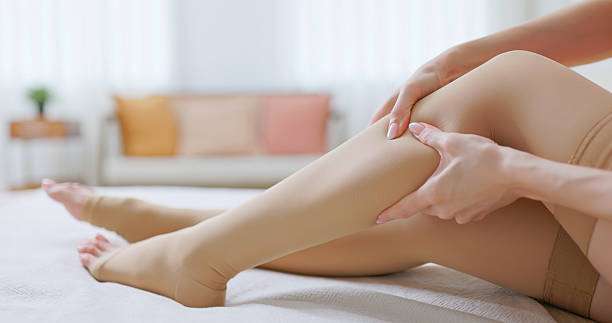
Among a wide range of occupational health equipment, compression socks for women are undoubtedly the most easily underestimated yet extremely important.
They are not only popular in the medical and nursing industry but are also gradually entering daily office work, sports, and even prenatal care scenarios.
However, when faced with compression socks labeled with different pressure levels on the market, many people wonder:
“Which one should I choose: light, moderate, or high pressure? Who is each pressure level suitable for?”
This article will provide a comprehensive analysis of the principles of compression, the needs of different user groups, the wearing effect, and precautions, and will also incorporate some personal experiences to help you easily find the most suitable compression socks for women.

Compression socks for women: basic knowledge of stress levels
First, it’s important to understand that the pressure rating of compression socks for women is indicated in mmHg (millimeters of mercury), which directly determines the support strength of the socks for the lower limbs.
Common pressure levels are generally divided into three categories:
|
Pressure level |
mmHg range |
Applicable situations |
|---|---|---|
|
Mild compression |
15–20 mmHg |
For those who sit for long periods, experience mild leg fatigue, or are trying compression stockings for the first time. |
|
moderate compression |
20–30 mmHg | People who stand for long periods of time (nurses, teachers, and service industry workers), those with mild varicose veins, and those who use this product during pregnancy. |
|
High compression |
30–40 mmHg |
For the prevention of varicose veins and deep vein thrombosis, use under the guidance of a doctor. |
Note: Highly compressed socks for women are not suitable for casual purchase and wear. It is best to use them under the guidance of a doctor or professional.
Light compression socks: the first choice for beginners and daily protection.
Suitable for:
- People who sit in the office for long periods of time
- Women who occasionally stand or walk
- People who want to relieve mild soreness in their lower limbs
- For first-time users who want to try compression socks but are afraid they’ll be too tight
Features
- Gentle support, with greater pressure on the ankles and gradually decreasing pressure above the knees.
- Relieves mild leg soreness
- Improve lower limb microcirculation
When I was working in the office, I tried mild compression socks for women. The most noticeable change was
My calves don’t feel as swollen and stiff as before when I leave work in the afternoon, and it’s easier to get up after sitting for a long time.
While they don’t provide the same noticeable support for the calves as medium compression stockings, they are sufficient for everyday prevention.
Medium compression stockings: the top choice for working women who stand for long periods.
Suitable for:
- Nurses and medical staff
- Teachers, cashiers, waiters and other occupations that require prolonged standing
- Women in the second and third trimesters of pregnancy (pregnant women should consult a doctor).
- Patients with mild varicose veins
Features
- Significantly enhanced support for the ankles and calves.
- Gradual pressure design helps blood return.
- It can effectively reduce lower limb edema and soreness.
- Supports a full day’s workload and prevents fatigue buildup.
During my hospital visit and internship, I noticed that almost all the nurses wore 20–30 mmHg compression socks for women. They told me, “Wearing these compression socks, even if you stand all day, your calves won’t feel sore and uncomfortable. You can even go for a walk or do some exercise after work.”
From this perspective, medium compression stockings meet both work requirements and provide safety and comfort, making them the most popular choice for women who stand for long periods.
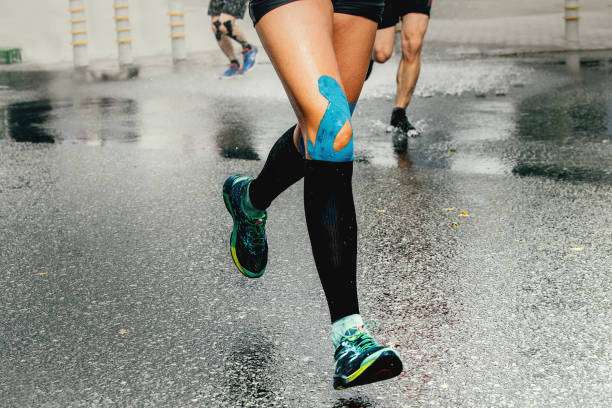
High-compression stockings: For women with medical needs.
Suitable for:
- Women with a significant risk of varicose veins or deep vein thrombosis
- Postoperative recovery patients
- Used for the prevention of deep vein thrombosis as recommended by the doctor.
- Pregnant women may require additional support if advised by a doctor.
Features
- Maximum pressure can significantly improve blood return.
- Significantly regulates venous pressure in the lower leg
- It can effectively relieve severe lower limb edema
Precautions
- It is not recommended to buy it yourself or wear it for extended periods of time.
- High-compression socks require precise foot measurements to ensure the correct size.
- Use as directed by your doctor to avoid hindering blood circulation.
compression socks for women based on individual circumstances
Sitting or standing for long periods of time?
- Prolonged sitting: Mild compression is sufficient
- For prolonged standing, moderate compression is recommended.
Is there a risk of varicose veins or blood clots?
- Yes: Consult a doctor; it may require high compression.
- None: Select mild or moderate based on workload.
Wearing comfort
- For first-timers, start with a milder approach.
- Gradually try medium pressure to find the style that best suits your foot shape and pressure.
Pregnancy, surgery, and recovery period
- The pressure level must be selected under the guidance of a doctor.
Tips for wearing compression socks for women
- Accuracy: Both leg and ankle circumferences should be measured to avoid the fit being too tight or too loose.
- Order of putting on and taking off: Put it on up to your ankles first, then pull it up to your calves.
- Pair with everyday shoes: Try to wear comfortable shoes to reduce the burden on your feet.
- Note the wearing time: Wear it during the day when you are active, and you can take it off at night when you are resting.
FAQ: Frequently Asked Questions
Q1: How long can women wear compression socks for women as they please?
It is recommended to wear it during the day, ideally for 8–10 hours continuously, and remove it at night when resting.
Q2: Can light compression stockings prevent varicose veins?
For people without varicose veins, mild compression stockings can be used as a preventative measure, but they cannot completely replace medical treatment.
Q3: Can pregnant women wear medium compression socks?
It is safe to wear, but it is best to choose the pressure level under the guidance of a doctor to ensure safety.
Q4: Can I buy high-compression socks myself?
Not recommended. High-compression stockings exert significant pressure, and if the size is not right, they may affect blood circulation. Use only as directed by your doctor.
Q5: Are there any special considerations when washing compression socks for women?
Hand washing or machine washing in a laundry bag is recommended. Avoid high-temperature drying to prevent affecting elasticity.
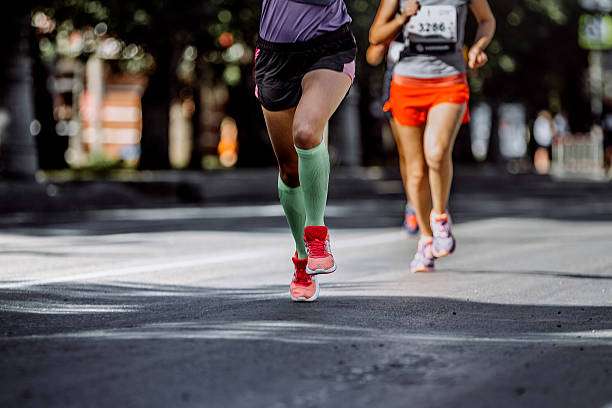
Summarize:
I’ve personally tried mild and moderate compression socks for women, and my biggest takeaway is
- Mild: Suitable for office workers and those who move around occasionally, relieves mild soreness and swelling.
- Moderate: Suitable for people who stand for long periods or engage in strenuous exercise; provides noticeable support and reduces leg fatigue.
- Height: For medical use only; professional guidance required.
Regardless of the grade, choosing the right size and compression is key to the effectiveness of compression socks for women.
My legs are noticeably sore and swollen after getting off work.
Prolonged sitting or standing
To prevent varicose veins
Therefore, choosing a pair of compression socks for women that are suitable for your pressure level would be the most practical investment.
Don’t wait until leg problems arise to regret it. Start protecting your lower limb health today. Find the stress level that suits you best, from mild to moderate, so that you can feel light and comfortable every day.