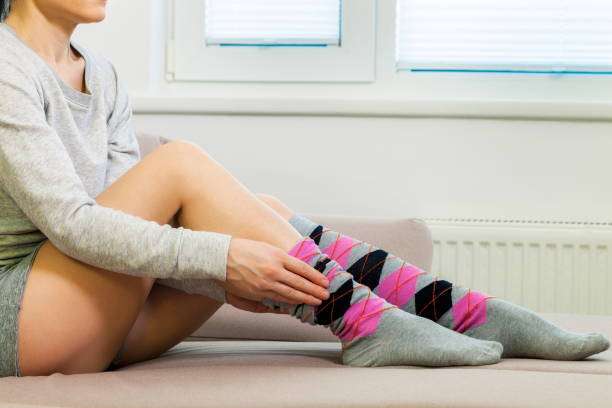
Many women, after standing or sitting at a desk all day, experience swollen calves and ankles after work and immediately take off their socks to give their legs a break when they get home. But some women do the opposite—they hesitate over one question: Can women’s compression socks be worn to bed?
This question seems simple, but there’s no single, universally accepted answer. Whether or not women’s compression socks are suitable for sleeping depends on their physical condition, stress level, purpose, and how they’re worn. Ignoring these details could actually negatively impact sleep quality, even if intended to provide relief.

Compression socks for women determine whether they can be worn to sleep.
Compression socks for women are not ordinary thermal socks. Their key feature is their tiered compression design:
- The ankle area experiences the most pressure.
- The lower leg gradually decreases in size upwards.
- It helps venous return and reduces blood pooling.
Because of this structure, compression socks for women are widely used during the day:
- People who stand or sit for long periods of time
- Travel, long-haul flights
- Post-exercise recovery
- People with mild venous discomfort
However, the problem is that
The body’s blood circulation is different during sleep than during the day.
When a person lies flat and falls asleep, the resistance to venous return in the lower limbs decreases significantly, which is why many people’s legs are not as swollen when they wake up in the morning.
Therefore, the key question regarding whether or not women should wear compression socks to bed is not whether they “can” or “need” to do so.
In what situations is it advisable for women to wear compression socks to bed?
In certain specific situations, wearing compression socks for women to sleep may indeed have benefits.
Severe leg swelling during the day, with noticeable discomfort at night.
If you belong to:
- Long-term standing work
- My calves were still swollen, painful, and tight after I lay down at night.
- Even a mild cramping sensation may occur.
Under the guidance of a doctor or professional, choosing low-pressure compression socks for women to help with short periods of sleep can help relieve discomfort.
During long-haul flights or jet lag
Many people experience a noticeable heaviness in their legs after a long flight, even after resting at home. At this time:
- Wear low-compression socks appropriately for women
- Helps improve lower limb circulation transition
However, it is usually only recommended for the first night or for a short period of time.
Medical needs of special populations
compression socks for women at night under professional guidance. However, this should be based on medical advice and not be attempted on one’s own.
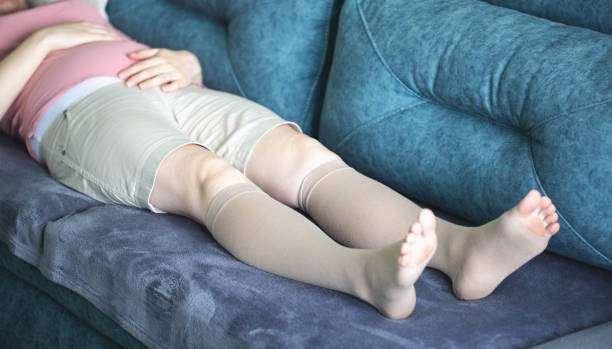
it is not recommended for women to wear compression socks to bed
For most ordinary women, wearing compression socks for extended periods is not necessary and may even be counterproductive.
1. The pressure level is too high.
If you wear it during the day:
- Medium- or high-pressure compression socks for women
So continuing to wear it at night might:
- Affects local blood microcirculation
- Creates a sense of oppression
This can lead to waking up at night or shallow sleep.
2. Sleepers are very sensitive to touch.
Some people believe:
- Ankle binding sensation
- calf wrapping sensation
Extremely sensitive. Even if wearing compression socks for women is fine during the day, it might be problematic at night:
- discomfort when turning over
- Subconscious tension
Decreased sleep quality
3. People with sensitive skin or who sweat easily.
Increased nighttime temperatures and sweating, if compression socks for women have poor breathability, may lead to:
- Skin feels stuffy
- itching
- The red mark is obvious.
in compression socks for women have very different experiences.
Here I can share some personal experiences.
For a while, I experienced swollen calves at night due to standing for long periods for several days in a row, so I tried wearing low-compression socks for women to sleep. The first night, my legs did feel a bit more relaxed, but on the second and third nights, I noticed that I was more likely to wake up in the middle of the night, and deeper pressure marks were left on my ankles.
Wear it only for 1–2 hours before bedtime and take it off before falling asleep, which actually made it more effective.
This also made me realize that compression socks for women are neither “right” nor “wrong” in themselves; the key lies in the timing and method of use.
If you absolutely must wear compression socks to bed, please pay attention to these points.
If you still wish to try wearing compression socks for women to sleep, it is recommended to follow these principles:
Select low pressure level
- Typically in the range of 10–15 mmHg
- Avoid medium- and high-voltage models
The size must be accurate.
- Tight compression socks for women pose a higher risk at night.
- Pay special attention to the circumference of the ankles and calves.
The material should be breathable and soft.
- Avoid heavy, overly elastic fabrics
- Nighttime comfort takes precedence over shaping effects.
Long-term continuous use is not recommended.
- Occasional, short-term attempts are acceptable.
- If numbness or tingling occurs, stop immediately.
An alternative that many people overlook is actually more suitable for nighttime.
Compared to wearing compression socks for women to sleep, the following method is gentler for most people:
- Elevate your legs for 10–15 minutes before bed.
- Simple calf stretches
- Soak your feet in warm water (but not hot).
- Use compression socks for women appropriately during the day, and allow your legs to recover naturally at night.
These methods are often more conducive to sleep than wearing clothes all night.
FAQ:
Q1: Is it okay to wear them to bed every day?
It’s not recommended. Unless specifically advised by a doctor, wearing compression socks for women at night for extended periods may affect comfort and sleep quality.
Q2: Is it always safe to wear compression socks when you have low blood pressure?
They are relatively safer, but it still depends on individual feelings. If you feel uncomfortable, you should stop wearing them.
Q3: Will wearing compression socks for women to sleep affect blood circulation?
If the pressure is too high or the size is not right, it may indeed have the opposite effect.
Q4: Is it okay to wear it during the day but not at night?
This is the most common and recommended approach.
Q5: Can it replace nighttime leg relaxation?
No, it cannot completely replace it. Compression socks are more suitable for daytime support than nighttime relaxation.
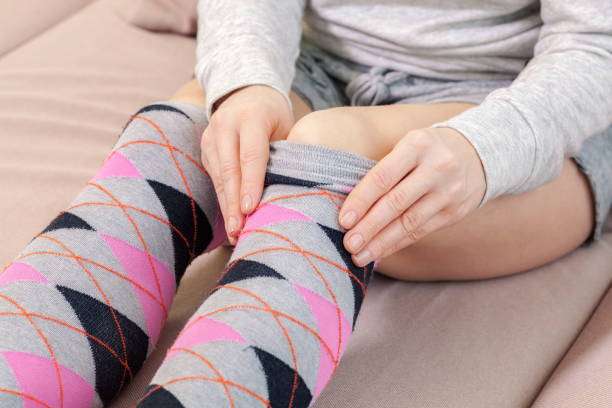
Summarize:
Whether or not you wear them to bed isn’t the most important issue. What’s more important is whether you’ve chosen compression socks for women that suit your lifestyle and physical needs.