With leg fatigue, soreness, and swelling becoming increasingly common, many women hesitate between two choices: compression socks for women or leg massagers.
Both seem to “relax the legs,” but after long-term use, you’ll find that they actually solve completely different problems.
Many people, when making a purchase, only consider “which one is more comfortable,” neglecting the usage scenario, the lasting effect, and the body’s adaptability. If you’re also struggling with this decision, you might want to read this article carefully first.
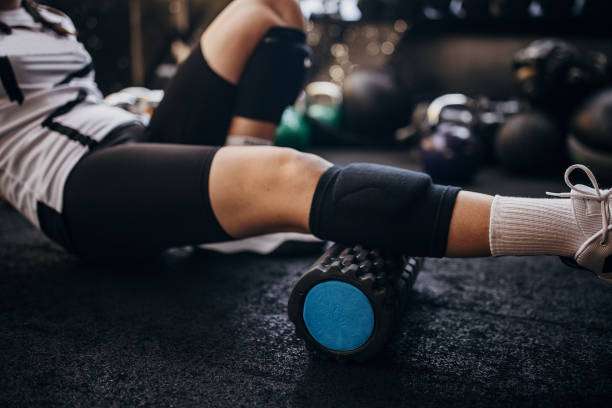
The root cause of your leg discomfort determines what you should choose.
Leg fatigue is not caused by a single factor. Common causes include:
- Prolonged sitting or standing slows down blood return.
- Long-term high venous pressure in the lower extremities
- Calf muscles remain tense and lack relaxation.
- Lactic acid buildup after exercise
- Edema caused by menstruation, pregnancy, or irregular sleep patterns
Compression socks for women and leg massagers correspond to two different paths:
- Compression socks for women: addressing blood circulation and pressure distribution
- Leg massager: Starting with “muscle relaxation” and “short-term relief”
Compression socks for women: More like an “all-day leg management tool”
1. The working principle is not “extrusion,” but rather scientific pressure distribution.
Many people worry when they first hear about compression socks for women, wondering if they’ll feel constricted or affect blood circulation.
However, properly made compression socks for women use a gradient pressure design.
- The ankle is under the most pressure
- Gradually decreasing upwards
This structure actually helps blood flow from the lower limbs back towards the heart, reducing blood pooling in the legs.
2. It addresses the “problems accumulated during the day”.
Compression socks for women are:
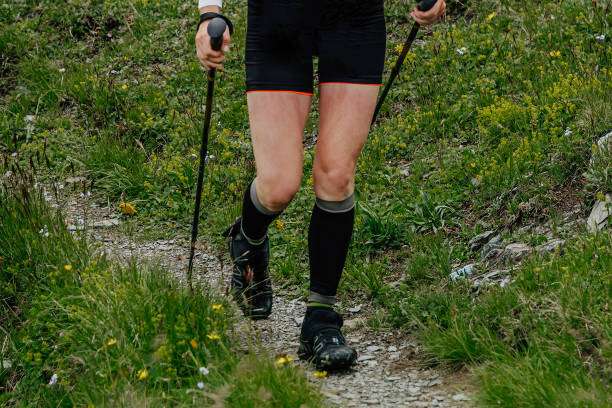
- Suitable for wearing to work, commuting, traveling, and exercising.
- No extra time required
- Do not disrupt your life rhythm
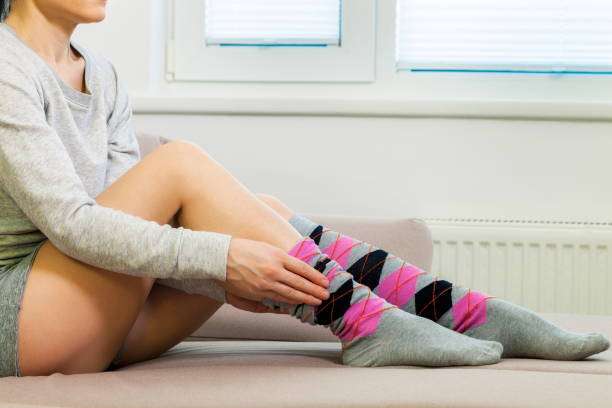
Compression socks for women after sitting at work for a long period of time. At first, I just felt that my calves were being “supported,” but after about a week, the noticeable heaviness in my legs at night was significantly reduced, which was something I couldn’t achieve with simple relaxation techniques before.
3. Suitable for
- Women who sit at a desk for long periods of time
- People who need to stand for long periods of time
- People who fly frequently and have long commutes
- People who need daily recovery after exercise
Leg massagers: provide immediate relaxation, but the effects are rather short-lived.
1. Provides a strong sense of immediate comfort.
Undeniably, the relaxing feeling that leg massagers bring when used is very noticeable:
- Shock
- Press
- Hot compress
Especially when you are particularly tired during the day or when your muscles are tight after exercise.
2. Its limitations are also obvious.
But its problem is:
- Limited usage time
- Can only be used in fixed scenarios
- The circulatory problems caused during the day were not truly resolved after the relaxation period ended.
I’ve tried using a leg massager at night before, but if I still sit for long periods during the day, the discomfort in my legs still returns the next day; it’s more of a “quick fix.”
Compression socks for women vs. leg massagers: Key differences
|
Dimension |
Compression socks for women |
Leg massager |
|---|---|---|
|
Usage time |
Wearable all day |
fixed time |
|
Mode of action |
Improve circulation and distribute pressure |
Relax muscles |
|
Does it affect my life? |
Almost no impact |
Requires dedicated time |
|
Long-term effects |
Cumulative |
Instant |
|
Suitable scenarios |
Work, travel, daily life |
Rest and relax |
Simply put:
If you want to solve the problem of “why your legs are tired every day”, compression socks for women are more suitable.
If you just want to “feel better tonight,” a leg massager is more direct.
Can we use both at the same time?
The answer is: yes, and many people do just that.
- Daytime: Wear compression socks for women to reduce fatigue buildup.
- Evening: Use a leg massager briefly to help relax.
This combination approach is actually more stable than relying on just one of them.
What should be considered when choosing compression socks for women?
- Choose the appropriate pressure level; there’s no need to blindly pursue high pressure.
- The size must be accurate; too tight will be uncomfortable.
- Pay attention to breathability and materials to avoid stuffiness.
- Truly good compression socks for women won’t make you “constantly aware of their presence” when you wear them.
FAQ:
Q1: Will women become more dependent on compression socks the more they wear them?
A: No. They are a circulatory aid, not a replacement for muscle function.
Q2: Can I use a leg massager every day?
A: Yes, but it is not recommended to use it at high intensity for extended periods of time.
Q3: Are compression socks for women suitable for everyone?
A: They are suitable for most healthy people, but those with specific medical conditions should consult a doctor.
Q4: Is it okay for women to wear compression socks to bed at night?
A: It’s generally not recommended unless specifically advised by a doctor.
Summarize:
If you find:
- Leg discomfort accumulates gradually each day.
- There isn’t much time specifically for relaxation.
- Looking for a solution that won’t disrupt your life.
Therefore, a pair of suitable compression socks for women is often an easier and more consistent choice to stick to.
Starting with daily management and then deciding whether additional relaxation tools are needed may actually be more suitable for most people.