
Compression socks for women are increasingly used in everyday life: sedentary office work, prolonged standing, exercise recovery, travel, and even pregnancy and postoperative care all rely on their support. However, a seriously underestimated issue is that the correct cleaning method directly determines the lifespan and compression effectiveness of compression socks for women.
Many people find that compression stockings, even after only a short period of wear, start to loosen, slip down, lose support, and even become uncomfortable to wear. The problem is often not with the product itself, but rather with the washing and care methods used.

Why do compression socks for women need to be “specially treated”?
“Unlike regular socks, the core value of compression socks for women lies in ‘stable and continuous gradient pressure.'”
This pressure comes from the highly precise elastic fiber structure inside the sock, and these fibers are extremely sensitive to the following factors:
- high temperature
- Strong alkaline detergent
- vigorous scrubbing or spin drying
- long-term soaking
Once the elastic fibers are damaged, compression socks for women can cause the following problems:
- Uneven pressure distribution
- Tight ankles, loose calves
- It tends to slip down after wearing.
- Loss of its intended supporting effect
It looks like it’s still wearable, but it’s actually no longer functional.
The golden rule for properly cleaning compression socks for women
Before proceeding with the specific steps, remember these 5 principles:
- Low temperature is always the priority
- clean. “Mild detergents are better than ‘thoroughly clean.'”
- Reduce mechanical pulling
- Air dry naturally, without relying on machines.
- Cleaning frequency is directly proportional to usage intensity
If you avoid these 5 pitfalls, you can avoid 80% of cleaning problems.
Correct Cleaning Steps for Compression Socks for Women
Step 1: Prepare the appropriate water temperature
Recommended water temperature: 20–30℃
Avoid using excessively hot or warm water.
Hot water causes elastic fibers to “lose their memory,” which is one of the reasons why compression socks for women loosen up the fastest.
Step 2: Choose a suitable detergent
Recommended use:
- neutral laundry detergent
- Baby laundry detergent
- Detergent designed for elastic fabrics
Avoid using:
- bleach
- powerful stain remover
- Soap (highly alkaline)
- Products containing fabric softener
Once, trying to save time, I used fabric softener on compression socks for women along with my regular clothes. After only a few washes, I noticed a significant decrease in their support. These kinds of “invisible damages” are often the most devastating.
wash; Step 3: Gently wash; do not rub.
Correct way:
- Flip the compression socks for women.
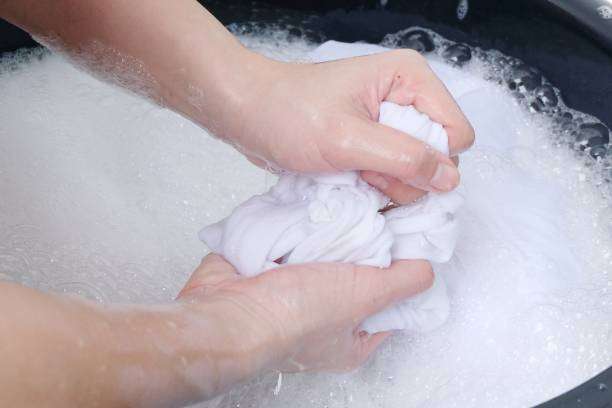
- Gently press and squeeze to wash
- Areas with concentrated stains can be gently rubbed and washed.
Incorrect method:
- Scrub vigorously
- wring dry
- Scrub with a brush
Remember: Compression socks for women are not cleaner the harder you wash them, but more durable the more gently you wash them.
Step 4: Rinse thoroughly, but do not pull or stretch.
Rinse repeatedly with clean water.
Ensure no detergent residue remains.
Do not stretch the stockings too much.
Detergent residue can continuously corrode elastic fibers, affecting the compression effect of compression socks for women in the long term.
Step 5: Air drying is the only correct answer.
Correct way to dry:
- Lay flat or hang folded
- Place in a cool, ventilated place
- Avoid direct sunlight
Prohibited behaviors:
- dryer
- Next to the heater
- Exposed to the sun
High temperatures can directly damage the elastic structure inside compression socks for women.

Can a washing machine wash compression socks for women?
“The answer is yes, but you must exercise ‘extreme restraint.'”
If machine washing is the only option, please follow these rules:
- Use a laundry bag (required)
- Select gentle mode
- Wash with cold water
- Wash separately or with light clothing
- Never dry
Even so, machine washing should not be too frequent. Compression socks for women that are frequently machine washed have a significantly shorter lifespan than hand-washed versions.
Recommended cleaning frequency for compression socks for women under different usage scenarios
|
Use cases |
Recommended cleaning frequency |
|---|---|
|
daily commute |
After each wear |
|
Standing for a long time |
After each wear |
|
Sports recovery |
After each wear |
|
Flight/Travel |
Immediately after use |
|
Short-term home stay |
After 1–2 times |
Compression socks for women come into direct contact with the skin, and sweat and oil residue can accelerate fiber aging. Washing them less often will not prolong their lifespan; on the contrary, it will have the opposite effect.
“ruined.” Compression socks for women have been “ruined.”
If the following situations occur, it indicates that the washing method may have caused irreversible damage to the socks:
- It’s noticeably looser than before after wearing it.
- The pressure in the ankle has decreased.
- The lower leg area is prone to slipping.
- Slower elastic recovery speed
- Uneven support
These compression socks for women, even if they look perfectly fine, have significantly reduced functionality.
Common cleaning mistakes should be avoided.
- “sterilize.” Use hot water to “sterilize.”
- long-term soaking
- Wring or spin dry
- Exposed to the sun
- Use fabric softener
These practices might not be a problem for regular socks, but for compression socks for women, they are almost all “slow-on-the-press” measures.
FAQ:
Q1: Can I wash it every day?
Yes, you can, and I recommend washing every day. The key is to use the correct method.
washing; Q2: Compression socks for women feel a little hard after washing; is that normal?
Slight stiffness may be due to incomplete drying or detergent residue. If it continues to stiffen, the fibers may be damaged.
Q3: Can I use disinfectant when cleaning?
Not recommended. Disinfectants can damage the structure of elastic fibers.
Q4: Can compression socks for women be washed with regular clothes?
It’s best to wash them separately, especially avoiding washing them with jeans or towels.
Q5: How long can compression socks be worn normally?
With proper cleaning, it typically maintains effective compression performance for 3–6 months.
Conclusion
Compression socks for women are not disposable items but rather functional wearable products that require proper care.
Compression socks for women that are more washable and have more stable compression, consider choosing professional products that clearly indicate care instructions and have transparent material structures.