
Hiking may seem like just “going uphill,” but anyone who has actually hiked long trails knows that the real challenge often comes from your legs. Continuous uphill climbs, prolonged periods with heavy loads, and the impact of descents all put enormous pressure on your calves and ankles. Many experienced outdoor enthusiasts are starting to add compression socks for women to their gear lists, not just for comfort, but also for endurance and recovery efficiency.
This article starts from the real needs of mountaineering, systematically explaining the mechanism of compression socks for women in mountaineering, key points for selection, wearing tips, and common misconceptions to help you walk more steadily, longer, and more easily on mountain trails.
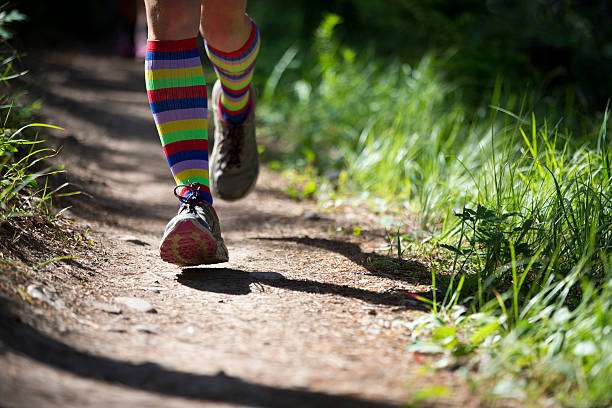
Why is mountain climbing more “damaging” to your legs than you think?
Many people underestimate the stress that mountain climbing puts on the lower limb circulatory system. Compared to city walking, mountain climbing has three distinct differences:
- First, the duration is long;
A complete mountain climb often takes 3–8 hours, keeping the leg muscles in a working state for an extended period. - Secondly, the steep
Slope requires continuous effort to go uphill and continuous braking to go downhill, which causes repeated tension in the calf muscles. - Third,
The weight of the backpack will further transfer the pressure to the calves and ankles.
Under these conditions, it is easy for the following to occur:
- calves felt tight and stiff
- Mild swelling of the ankle
- The soreness was delayed after descending the mountain.
- The recovery time was significantly longer on the second day.
This is why more and more mountaineers are choosing compression socks for women as part of their functional gear.
The core role of compression socks in mountaineering
Compression socks for women are not just regular tighter socks; their key feature is their gradient pressure structure. This structure provides greater support at the ankle, gradually reducing pressure upwards to help blood flow.
In mountaineering environments, compression socks primarily offer four types of assistance:
Improves leg circulation efficiency
When climbing hills for extended periods, blood tends to stagnate in the lower limbs. Compression socks for women promote venous return through external pressure, resulting in a more stable oxygen supply to the legs and a slower onset of fatigue.
Reduce muscle vibration and fatigue
Many people overlook a detail: with every step, the calf muscles vibrate subtly. The more uneven the surface and the more downhill the terrain, the more noticeable the vibration. Compression socks provide support and reduce wasted vibration.
Control post-exercise swelling
It’s not uncommon for ankles to become thicker after long hikes. Compression socks for women provide pressure control during exercise, reducing water retention.
Speed up post-workout recovery
Many hiking enthusiasts have found that wearing compression socks to complete a route significantly reduces soreness the next day and speeds up recovery.
The longer the hiking route, the more valuable the compression socks become.
Compression socks for women may not be noticeable on short hikes in parks and mountains, but their value is significantly amplified in the following scenarios:
- More than 4 hours on mountain roads
- Multiple long downhill sections
- Stone Steps Section
- Carrying camping gear
- Routes with significant elevation changes
A friend who frequently participates in weekend hiking activities initially only wore compression socks for women during marathons. Later, he tried using them in mountain climbing and reported that the feeling of “heaviness” in the legs was significantly delayed in the second half of the race.
compression socks for women when hiking?
The usage scenarios for mountain climbing are different from daily commuting, and choosing the wrong type will directly affect the experience.
Recommended stress level
- 15–20 mmHg: Suitable for most climbers
- 20–30 mmHg: More suitable for long or heavy-load routes.
Compression socks for women: higher pressure isn’t always better; the key is to strike a balance between support and comfort.
Length selection suggestions
Hiking is more recommended:
knee-length compression socks are suitable for women.
is that they can fully cover the calf muscles, which are the main area of force exertion.
Fabric Key Points
Compression socks for women used in mountaineering should include:
- Moisture-wicking
- Quick drying
- Anti-friction
- Anti-pilling
- Breathable weave
A high cotton content is actually unsuitable for long-distance mountain climbing.
Structural details are crucial
High-quality compression socks for women typically include:
- Foot arch support belt
- Ankle stabilization zone
- Lower leg section knitting
- Anti-slip sock cuff design
These structures are very useful in long-distance mountaineering.
The correct way to wear compression socks when hiking
Many people have the right equipment, but they wear it incorrectly.
Suggested approach:
- Wear compression socks for women before setting off.
- Don’t wait until you’re halfway up to change.
- Pair with hiking sock systems (outer layer or replacement)
- Do not try it on high-intensity activities the first time.
- Adapt to the shorter routes first.
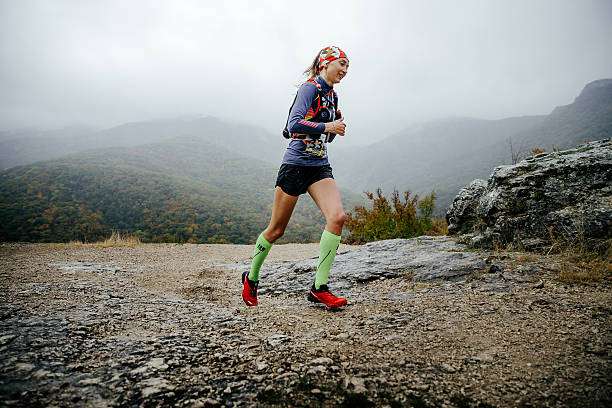
The value of compression socks becomes more apparent during the descent.
Many people only pay attention to uphill sections, but downhill sections are actually more harmful to the legs.
On the way down the mountain:
- Greater impact
- The muscles are in a state of immobilization.
- The lower leg is more prone to minor injuries.
Compression socks for women offer extra stability and a snug fit at this stage. Many people who have worn them find that the “shaking” sensation in the legs is less noticeable on the downhill section.
Is it okay to wear compression socks when hiking for several consecutive days?
Yes, and it’s even more meaningful.
Compression socks for women can be used during multi-day mountain climbing:
- Reduce cumulative fatigue
- Controlling continuous swelling
- Improve the starting condition on the second day
Many multi-day hikers prepare two pairs of compression socks for women to alternate between.
Common Misconceptions
Myth 1: The tighter the fit, the more professional.
Excessive stress can affect comfort and range of motion.
Myth 2: Only suitable for running
Excessive stress can affect comfort and range of motion.
In fact, compression socks for women are highly suitable for mountaineering.
Myth 3: Directly apply new socks to long-term trading
You must first get used to a short trip
Myth 4: Choose any size
Compression stockings must be selected according to leg circumference size.
FAQ (Frequently Asked Questions)
Q1: Will compression socks make my feet hotter?
A: Professional sports compression socks for women usually use a sweat-wicking knit, and they often feel drier than thick cotton socks.
Q2: Can compression socks replace hiking socks? A: Partially yes, but it’s recommended to choose
women’s compression socks designed for hiking or to pair them with system socks
Q3: Do beginner hikers need compression socks? A:
Compression socks are optional for short hikes, but they are highly recommended for long or continuous routes.
Q4: Can I continue wearing compression socks after hiking?
A: Yes, wearing them for 2–4 hours after exercise can help with recovery
Q5: How often should compression socks for women be replaced?
A: Generally, with frequent use, their elasticity will decrease after 3-6 months, and they should be replaced promptly.
Conclusion
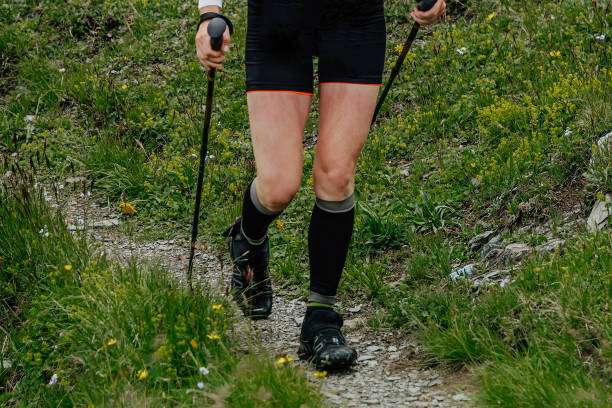
Hiking isn’t just about willpower; it’s also about physical management. Leg circulation efficiency, muscle stability, and recovery speed all directly impact the route experience. Compression socks for women, as a type of functional gear, provide continuous support during long ascents and descents, slowing down fatigue and accelerating recovery.
If your hiking routes are getting longer and more intense, it’s time to add compression socks to your gear list.
Before your next hike, upgrade your gear—choose a pair of professional-grade compression socks for women and get used to wearing them beforehand. You’ll feel a noticeable difference in the latter half of the climb. Selecting the right model and compression level will make every hike more stable, easier, and longer.