
Compression socks for women, as the name suggests, are medical or sports support socks designed for women. They primarily help blood flow back to the legs through appropriate pressure, relieving fatigue and preventing problems such as edema and varicose veins.
With the fast pace of life, more and more women are paying attention to a clothing experience that balances health and comfort, especially in summer. Many people ask, “Can women’s compression socks be worn in summer? Won’t they be too stuffy?”

The principle and function of compression socks for women
Compression socks for women feature a gradually decreasing pressure design from the ankle to the calf, helping blood flow smoothly back to the heart and reducing blood pooling in the lower limbs. These socks are not only suitable for women who stand or sit for long periods but also ideal for pregnant women and those who exercise regularly.
Relieving fatigue: In the high temperatures of summer, blood vessels dilate, making the lower limbs prone to swelling. Wearing compression stockings can effectively reduce the feeling of heaviness in the legs.
To prevent varicose veins, especially for women with a family history of varicose veins, it is recommended to wear light compression stockings even in summer.
Exercise aid: Many women enjoy morning runs or gym workouts in the summer, and wearing compression socks can help stabilize muscles and reduce soreness.
Do women’s compression socks get too hot in the summer?
This is a question that many women are most concerned about. Indeed, traditional compression socks are made of thicker materials, and if worn in summer, they may feel stuffy and hot. However, with the advancement of material technology, modern compression socks for women now offer a variety of lightweight and breathable options.
1. Material Influence
Thin nylon or polyester: breathable, not sweaty, suitable for hot weather.
Cotton blends: soft and comfortable, but they dry slowly after absorbing moisture, which may feel a bit stuffy in summer.
Functional fibers: Some brands add moisture-wicking fibers that can quickly evaporate sweat and keep you dry.
2. Pressure level
Compression socks for women are typically classified by pressure as mild (15-20 mmHg), moderate (20-30 mmHg), and severe (30-40 mmHg).
In summer, it is recommended to choose light compression socks, which can provide support without being too tight and causing a stuffy feeling.
High-compression socks are more suitable for winter or special medical needs.
3. Duration of wearing
Wearing compression socks all day in the summer may cause localized stuffiness or slight sweating.
It is recommended to wear it when going out or when you need to stand for a long time and take it off as soon as you get home to allow your legs to breathe.
I once tried running all day in medium compression socks in the summer. My legs felt slightly stuffy when I got off work in the afternoon, but I felt much more comfortable after changing into thin cotton socks. This shows that the choice of material and compression is very important.
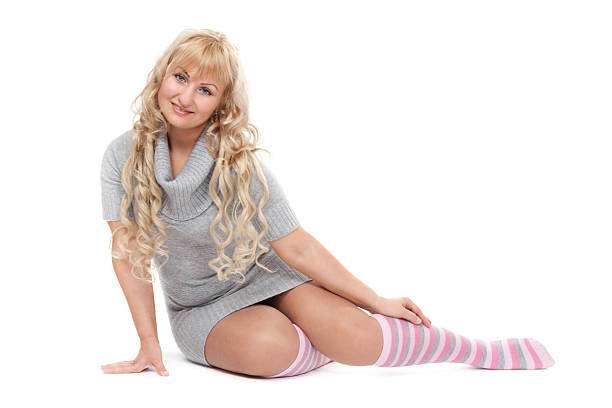
compression socks for women in summer
For breathable and lightweight
compression socks, prioritize those labeled “summer style” or “breathable and sweat-wicking.” Some brands use mesh designs for better airflow.
For proper pressure,
It is recommended to wear light compression (15-20 mmHg) for daily use in summer and medium compression (20-25 mmHg) for exercise or short-term outdoor activities.
Properly sized
Compression stockings should fit the shape of the legs but not be too tight. Measure the circumference of the ankles and calves to avoid excessive compression that can cause a feeling of heat.
–
colored or thin, semi-sheer stockings, which are both beautiful and won’t absorb heat. They won’t look out of place when paired with skirts or shorts.
Practical scenarios for wearing compression socks for women in summer
Commuting to work: Sitting in the office for long periods of time can easily cause leg swelling; thin compression socks can relieve discomfort.
When traveling: Wearing compression socks can prevent lower limb edema and fatigue when taking long-haul flights or trains.
Sports and fitness: Wear it during morning runs, yoga, or gym workouts to aid blood circulation and muscle recovery.
Pregnancy care: Pregnant women can wear light compression socks in the summer to relieve ankle swelling and leg fatigue.
FAQ:
Q1: Will I sweat when wearing compression socks in the summer?
A: You might sweat slightly, but if you choose breathable materials and light pressure, it usually won’t feel too stuffy.
Q2: Can I wear compression stockings all day?
A: It is recommended to wear them for 6-8 hours daily and take them off after returning home to allow your legs to breathe.
If your blood vessels are healthy or you need them for medical purposes, you can extend the wearing time as advised by your doctor.
Q3: Will wearing compression socks affect heat dissipation?
A: Modern summer compression socks are made of moisture-wicking fibers, which have good heat dissipation performance and will not significantly affect body temperature regulation.
Q4: Can pregnant women wear these in the summer?
A: You can choose light compression socks, but pay attention to the breathability and comfort of the material, and avoid wearing them for a long time.

Summarize
Compression socks for women are perfectly fine to wear in summer, but attention should be paid to the material, pressure, and wearing time. Lightweight and breathable compression socks can help with blood circulation without making your legs feel stuffy. Practical occasions for wearing compression socks for women in summer include commuting, exercising, long-distance travel, and pregnancy care. Choosing the right style, correct pressure, and a proper size is key to comfortable wear.
If you also want to keep your legs light and prevent swelling and fatigue in the summer, I recommend getting a pair of professional lightweight compression socks for women to make your summer commute, travel, or exercise more comfortable and free!