
With increasing health awareness, more and more women are paying attention to the benefits of compression socks for women. Through their scientifically designed segmented pressure, these socks improve blood flow in the lower limbs, alleviating edema, fatigue, and varicose veins. However, many people are unaware of some key health issues before wearing them, which can easily lead to discomfort or unsatisfactory results. This article will analyze in detail the health issues that need to be considered before wearing compression socks, helping women use them safely.
1. Understand your own health condition
When wearing compression socks for women, it’s essential to understand your own health condition. The following situations require special attention:
Pre-existing vascular or heart disease, such as deep vein thrombosis, severe varicose veins, heart failure, etc.
Skin problems: If there are open wounds, severe eczema, or infections on the lower limbs, these should be treated before considering wearing compression stockings.
For diabetic patients: Blood circulation in the feet may be affected; it is best to consult a doctor before wearing them.
If any of the above situations exist, it is recommended to consult a professional doctor first to confirm the appropriate pressure level and wearing time.
2. Select the appropriate pressure rating
Compression socks for women are typically classified into mild (8–15 mmHg), moderate (15–20 mmHg), high (20–30 mmHg), and medical grade (30–40 mmHg).
Daily care: Mild or moderate is sufficient and suitable for office work, light exercise, or daily activities.
Varicose veins or doctor’s advice: Choose high-grade or medical-grade according to your doctor’s recommendations.
Choosing compression socks with excessively high pressure may cause foot discomfort, impaired blood circulation, and even affect health.
3. Wearing time and frequency
Compression socks for women are not necessary all day long; the timing and frequency of wearing them also need to be considered.
Daily protection: It can be worn when working or standing or sitting for long periods of time, but it is generally not recommended to wear it while sleeping.
Prolonged wear: If worn continuously for more than 8–10 hours, adjustments need to be made according to individual circumstances.
Travel or exercise: Wear it during long flights, long walks, or light exercise to help blood flow back to the heart.
Wearing them for extended periods or at night may increase pressure on the feet, which is detrimental to health.
4. Correct way to wear it
you wear compression socks for women also directly affects the effect and comfort:
First, clean your legs: keep them dry to avoid friction caused by sweaty feet or eczema.
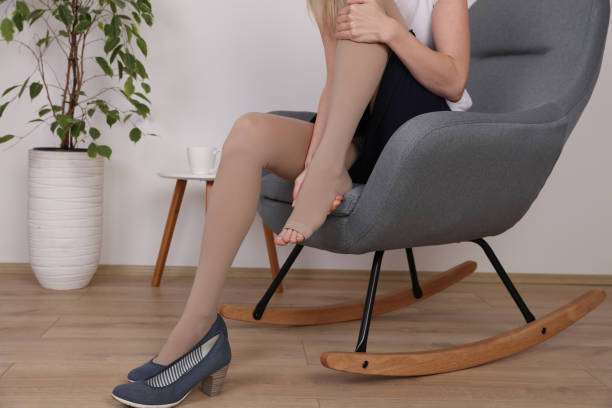
Start with your toes: Gently roll up your socks, slowly pulling them up from your toes to your calves.
Adjust for wrinkles: Ensure the socks are flat and free of noticeable wrinkles or rolled edges.
Observe the color of your toes: if they turn white, purple, or numb after wearing the shoes, it means the pressure is too high and they need to be readjusted.
5. Avoid common mistakes
Common misconceptions about wearing compression socks for women include:
Incorrect size: Too small and it will cause injury; too large and the effect will not be obvious.
Wearing clothes regardless of the occasion: Wearing them under excessive pressure or all day may increase the burden on blood return.
Ignore body signals: If you experience numbness, tingling, or pain in your legs, remove your clothes immediately and rest.

6. Pay attention to special populations
Pregnant women: They can wear low- to medium-pressure compression stockings to relieve lower limb swelling during pregnancy, but they should consult an obstetrician.
Elderly women: Their skin is delicate, so it is recommended to choose soft materials and moderate pressure.
For active women: Wearing compression stockings before and after exercise can help blood flow and relieve fatigue, but you should choose sports-specific ones.
I’ve tried several different brands of compression socks for women. When I first started wearing them, I didn’t pay attention to the size and pressure level, and I experienced slight numbness in my feet. Later, I remeasured my feet based on my foot length and leg circumference and chose a style with light to medium pressure. Not only are they comfortable to wear, but they also significantly reduce leg swelling and soreness.
This reminds me that preparation before wearing is really important.
FAQ
Q1: Will compression socks for women affect blood circulation?
Compression socks of the correct pressure and size will not hinder blood circulation; on the contrary, they can improve blood flow in the lower limbs.
Q2: Will wearing compression stockings cause dependency?
No. It’s an assistive tool and won’t cause leg muscle atrophy.
Q3: Can compression socks be washed?
Yes, but it is recommended to hand wash or machine wash with a laundry bag, avoiding high temperatures and vigorous rubbing to extend their lifespan.
Q4: Can I wear them during pregnancy?
You can wear low- to medium-pressure compression stockings, which can help relieve swelling, but you should consult your doctor first.
Q5: Are they suitable for wearing during exercise?
Compression socks designed for sports can improve circulation efficiency and reduce fatigue and muscle soreness, but regular ones may not be suitable for strenuous exercise.
Summarize
When wearing compression socks for women, it’s crucial to understand your own health condition, choose the appropriate pressure level, and master the correct wearing method. It’s a gentle and effective daily aid that can not only relieve fatigue and swelling but also play a role in maintaining long-term leg health.
If you frequently experience leg soreness, swelling, or prolonged standing at work, consider measuring your leg shape and choosing suitable compression socks for women to start wearing, providing scientific care for your legs. The earlier you pay attention, the easier it is to maintain lower limb health.